
Psychology of Money: How to Control Your Money (Instead of It Controlling You)
WEALTH
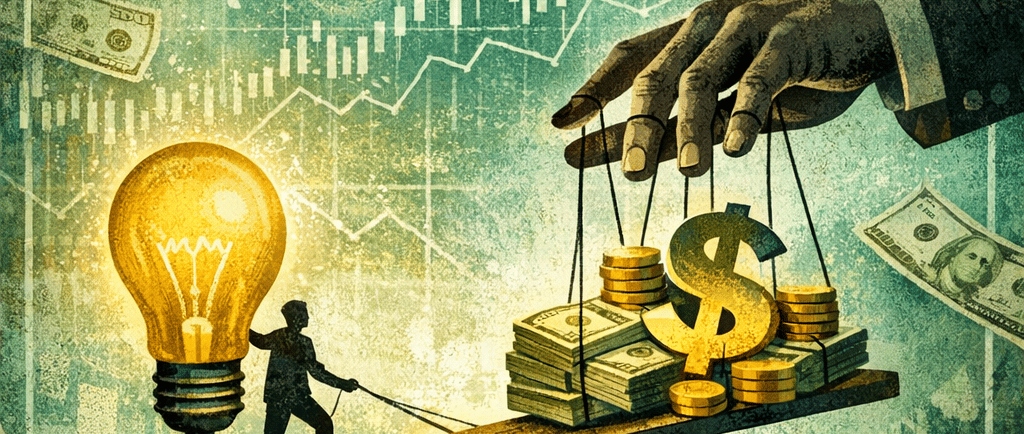

Psychology of Money: How to Control Your Money (Instead of It Controlling You)
Learn the psychology of money—how beliefs, habits, and emotions shape your spending, saving, and investing. Practical steps, motivational real-life stories, and modern USA-focused strategies to take control of your finances.
Money is weird. Not “compound interest” weird (though that’s also weird). Money is emotionally weird.
You can know the math, download the budgeting apps, watch the TikToks, and still find yourself impulse-buying a “limited edition” gadget at 11:47 PM like a raccoon with a debit card. That’s not a character flaw. That’s psychology.
Controlling your money is less about finding the “perfect” plan and more about building a system that works with your brain: your fears, your impulses, your identity, your past, and your social environment. In the U.S. right now, this matters more than ever because the environment is designed to make spending feel painless while debt gets expensive fast.
Consider just a few current signals:
· U.S. credit card balances are around $1.23 trillion (Q3 2025).
· Total household debt hit $18.59 trillion in Q3 2025.
· Credit card interest rates remain punishing: the Fed’s “all accounts” series shows 21.39% (Aug 2025).
· The U.S. personal saving rate has hovered around ~4% in recent months (e.g., 4.0% in September 2025).
That combination—high balances + high interest + low savings—creates a psychological pressure cooker. The goal of this article is to give you a mindset + method that makes money feel calmer and more controllable.
Let’s build that.
1) The Real “Psychology of Money”: Your Brain Wants Safety, Status, and Relief
Your financial behavior usually serves one (or more) of these emotional jobs:
· Safety: “If I buy this / save this / hoard this, I’ll be okay.”
· Status: “If I have this, I’ll be seen as successful / smart / worthy.”
· Relief: “If I buy this right now, I won’t feel stressed for 10 minutes.”
Money decisions happen at the intersection of logic and emotion. And emotion often wins because it’s faster. Your brain is optimized for survival in the short term, not optimization over 30 years.
Translation: You don’t need more shame. You need better design.
2) Money Scripts: The Hidden Beliefs Running Your Wallet
A “money script” is a deeply held belief about money often learned in childhood that quietly directs adult behavior.
Common scripts (and how they show up):
· “Money is scarce.”
You may over-save, under-invest, or feel constant anxiety even with a good income.
· “Money is for enjoying.”
You may treat every paycheck like a celebration and struggle with consistency.
· “Rich people are greedy.”
You may sabotage earning or investing because success feels morally suspicious.
· “I’m just not good with money.”
You may avoid looking at bank accounts or give up quickly after mistakes.
Here’s the trick: scripts aren’t “true” or “false.” They’re stories your brain uses to predict the world. The fix isn’t arguing with yourself, it’s building evidence that a new story is safer and more accurate.
New script that works:
“I can be the kind of person who handles money calmly, one small system at a time.”
3) The Attention Tax: Why Modern Spending Feels Effortless (and Dangerous)
Today’s spending systems are frictionless by design: one-click checkout, saved cards, buy-now-pay-later, subscriptions you forget exist. That’s convenient… and psychologically expensive.
When spending is painless, your brain doesn’t “feel” the cost. But debt definitely feels it later especially with high interest rates.
The Federal Reserve’s credit card interest series shows rates around 21%+ in 2025.
At that level, carrying balances can quietly drain future freedom.
Goal: Put friction back into spending, and automation into saving.
4) The “Three Accounts” System: A Brain-Friendly Way to Control Money
Most people fail at budgeting because they try to track everything perfectly. Your brain hates that.
Try a simpler approach:
Account 1: Bills (Autopay Zone)
· Rent/mortgage
· Utilities
· Insurance
· Minimum debt payments
Account 2: Spending (Guilt-Free Zone)
· Groceries
· Gas
· Eating out
· Fun
· Random life stuff
Account 3: Future You (Automatic Wealth Zone)
· Emergency fund
· Retirement contributions
· Extra debt payoff
· Investing
How it controls money:
It replaces daily willpower with structure. You don’t “decide” to save you default into it.
5) Real-Life Story: The Nurse Who Stopped “Leaking Money” Without Extreme Budgeting
(Composite story based on common real-world patterns details changed for privacy.)
“Maria,” a nurse in Texas, wasn’t reckless. She paid her bills. She just felt broke all the time. Her bank account looked like a slow leak: subscriptions, DoorDash, “just this once” purchases, and a credit card balance that never truly went down.
What changed wasn’t motivation. It was visibility and boundaries.
She did three things:
1. Created a spending account and used a separate debit card for it.
2. Capped weekly “life noise” spending (coffee, snacks, random Amazon) at one fixed number.
3. Automated $150/week into an emergency fund the day after payday.
Within three months, she didn’t feel “rich,” but she felt in control. That’s the first victory. Control comes before wealth.
6) The “Emergency Fund” Isn’t Just Financial—It’s Psychological Armor
An emergency fund is not merely dollars in a savings account. It is:
· lower anxiety,
· fewer desperate decisions,
· less reliance on credit cards,
· more negotiating power (with jobs, landlords, life).
And in the U.S., where the personal saving rate has been around ~4% recently, building a buffer is a competitive advantage.
A practical target:
· Start with $1,000 (quick win)
· Then aim for 1 month of expenses
· Eventually 3–6 months if possible
If that sounds huge, shrink the time horizon:
“Can I build a $25/day habit?”
That’s not a finance question. That’s a psychology question.
7) The Debt Trap: Why High-Interest Debt Feels Like Running Uphill in Sand
Debt isn’t morally bad. But high-interest consumer debt is mathematically brutal.
With U.S. credit card balances around $1.23T and rates over 20%, millions of people are paying “rent” to the past.
Two debt payoff strategies (choose the one your brain will actually follow)
A) Avalanche (math-best): Pay extra on the highest interest rate first.
B) Snowball (emotion-best): Pay extra on the smallest balance first for quick wins.
Psychology matters. Quick wins create momentum. Momentum creates consistency. Consistency creates results.
One powerful tactic:
Call your issuer and ask for a lower APR or a hardship plan. You’re not begging , you’re negotiating.
8) Spending Triggers: Your “Money Environment” Controls You More Than You Think
Most overspending is triggered, not planned.
Common triggers:
Stress after work
Social pressure
“I deserve it”
Late-night scrolling
Boredom
Feeling behind in life
Your job is not to become a monk. Your job is to build guardrails.
Guardrails that work:
24-hour rule for non-essentials over $50
Unsubscribe from retail emails (seriously)
Remove stored payment info from your phone/browser
Use a “wish list” instead of “buy now”
Limit shopping apps to a folder called “Later (Probably Never)”
You’re not weak. You’re human. Design beats willpower.
9) The Identity Shift: The Fastest Way to Change Money Habits
Behavior change sticks when it becomes identity.
Instead of: “I’m trying to save.”
Say: “I’m the kind of person who pays myself first.”
Instead of: “I’m bad with money.”
Say: “I’m learning money like a skill.”
Instead of: “I can’t afford it.”
Say: “It’s not a priority right now.”
That last one matters. “I can’t afford it” feels like deprivation. “Not a priority” feels like agency.
10) Investing Psychology: The Market Pays the Patient (Not the Panicked)
Investing is where money psychology gets spicy, because your emotions will try to “protect” you at exactly the wrong time.
The classic emotional cycle:
Market goes up → FOMO (“I should’ve bought more!”)
Market drops → fear (“I should sell before it gets worse!”)
That fear is normal. But acting on it is expensive.
The simple rule most people ignore:
Long-term investing rewards consistency more than brilliance.
For many U.S. workers, the most powerful investing move is boring:
Contribute consistently to a 401(k) (especially for employer match)
Consider IRA options if appropriate
Use diversified, low-cost funds (the specific choice depends on your situation)
Also, retirement contribution limits change. For example, the IRS announced updated 401(k) limits for 2026 (employee deferrals).
(Always verify the limit for your tax year and your plan rules.)
Psychology tip: Automate contributions so you don’t have to “feel brave” every month.
11) Real-Life Story: The Couple Who Stopped Fighting About Money by Changing One Word
(Composite story.)
“Jordan” and “Alyssa” fought about money constantly. Not because the numbers were impossible because every money conversation felt like a character judgment:
“You’re irresponsible.”
“You’re controlling.”
“You don’t care about our future.”
They changed one word: from blame to curiosity.
They implemented a weekly 20-minute “money meeting” with two rules:
No accusations. Only observations.
Every expense must be labeled: need, want, or value.
Suddenly, “eating out” wasn’t “wasteful” it was “a value: convenience and together time.”
But it still had a cap. Values got a budget.
They stopped fighting because they stopped treating money like morality.
12) The “Control Your Money” Checklist (Practical, Not Perfect)
If you want control, aim for these in order:
Know your baseline: what comes in, what must go out
Stop the bleeding: cancel forgotten subscriptions, cut 1–2 high-leak categories
Build a starter emergency fund: $1,000 → 1 month
Attack high-interest debt with avalanche or snowball
Automate savings and investing
Increase income (skills, negotiation, side work) after stabilizing the basics
Protect your downside: insurance, basic estate documents, reasonable risk management
Control is a staircase. Don’t demand the penthouse on day one.
14) Frequently Asked Questions
How do I control my money if I live paycheck to paycheck?
Start with visibility + one automatic habit: auto-transfer a small amount ($10–$25) right after payday into a buffer account. Then reduce one “money leak.” Control begins with one repeatable win.
What’s the best budgeting method?
The best method is the one you’ll stick with. Many people do well with a simplified approach (separate accounts + automation) rather than tracking every single purchase.
Should I pay off debt or invest first?
If you have high-interest credit card debt, it often makes sense to prioritize that because rates are so high. In 2025, credit card rates have been around 21%+ on average for all accounts in Fed data.
But if you have an employer 401(k) match, consider capturing the match while paying down debt it’s hard to beat “free money.”
How do I stay motivated?
Motivation is unreliable. Systems are reliable. Automate the good moves, add friction to the bad ones, and track progress visually (even a simple chart on paper).
Control Is a Skill, Not a Personality Trait
The psychology of money isn’t about becoming a different person overnight. It’s about building a money system that respects your humanity: your emotions, your habits, your environment, and your future self.
Your money doesn’t need you to be perfect. It needs you to be consistent.
And here’s the paradox that makes this whole thing work:
Once you start controlling your money even a little your brain relaxes. When your brain relaxes, you make better decisions. Better decisions create more control.
That’s the upward spiral. Build it one small, sturdy rung at a time.